What the Delimitation Bill 2026 Means for Every Indian Voter
Have you ever thought about whether your vote counts as much as someone else’s in another state? Currently, that question is at the center of one of India’s biggest political debates. A special three-day session of Parliament started today, and the Delimitation Bill 2026 is the main topic. This one bill could change Indian democracy for the next 25 years.
What’s going on in Parliament right now?
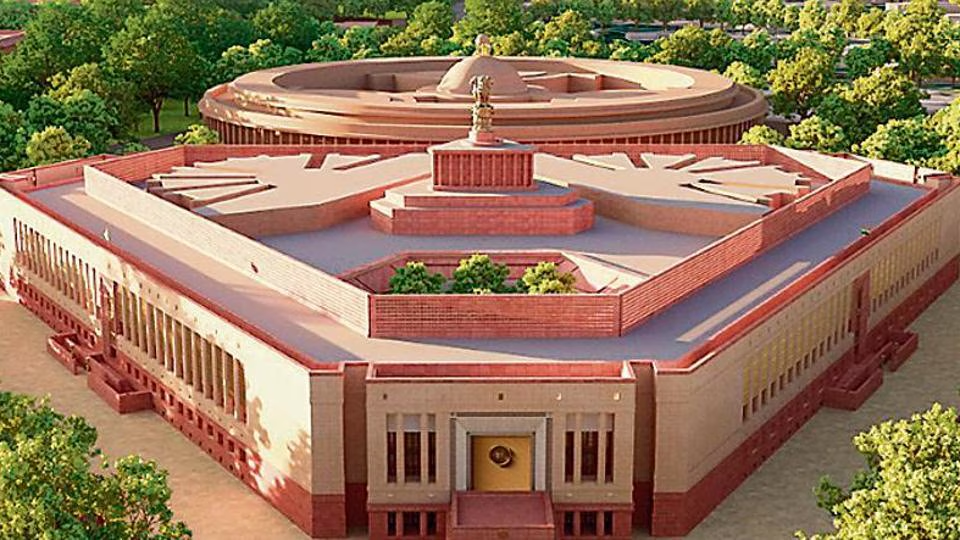
On April 16, 2026, the government held a special session to introduce three important bills. The Delimitation Bill, 2026, is the one that people are talking about the most. It would raise the number of Lok Sabha seats from 543 to 815, which is a 50% increase. Each state will get a number of seats that is fair to it. 272 of these 815 seats will be set aside for women. This finally puts the Women’s Reservation Act into effect before the 2029 elections.
Instead of waiting for the delayed 2021 Census results, which are expected in 2027, the bill uses the 2011 Census as its base data. The government says that the proposed policy is the quickest way to make women’s reservation a reality. Union Law Minister Arjun Ram Meghwal brought the bill to the Lok Sabha. At the same time, Home Minister Amit Shah brought a separate bill to change the Union Territories.
What Makes Southern States So Mad?
This is where things get tricky. States in the south, like Tamil Nadu, Kerala, Karnataka, Andhra Pradesh, and Telangana, have done a much better job of keeping population growth in check than states in the north. If the seats were divided up based on population, the northern states would get a bigger share of the new seats.
Southern politicians worry that, despite all states getting 50% more seats, their House power will be less than the more populous North’s. Leaders of the opposition, like Congress leader Mallikarjun Kharge and AIMIM leader Asaduddin Owaisi, have spoken out against the bill on the floor. The INDI alliance says that the government is acting politically by using 2011 data to push delimitation instead of waiting for more accurate, up-to-date numbers.
What Happens Next, and What Should You Know?
People will vote on all three bills on Friday, April 17, at 4 PM. If this bill passes, a delimitation commission will be set up to redraw the lines between constituencies all over the country. This will have a direct impact on how many MPs your district elects and how many seats are set aside for women in your state.
This is more than just a political debate for voters. More seats in the Lok Sabha could help people hear you better. More women could become leaders in mainstream politics if they receive a chance. But how fairly the new map is drawn will decide if this change really helps democracy or just helps the party in power.
In conclusion
The Delimitation Bill 2026 is crucial. Some people think it’s a long-overdue democratic reform, while others think it’s a politically motivated move. It’s clear that the result of Friday’s vote will change Indian elections for many years to come. Every Indian voter has a stake in the electoral process, so stay up to date and involved.
What do you think? Is the Delimitation Bill a good thing for democracy or a bad thing for the balance of power between the states? Please let us know in the comments below!